Data Management Plan template
Use this template to plan how research data will be created, collected, organised, documented, stored, protected, shared, preserved and reused throughout and after a research project.
The template can be adapted to the requirements of a research institution, funding programme, repository or scientific discipline.
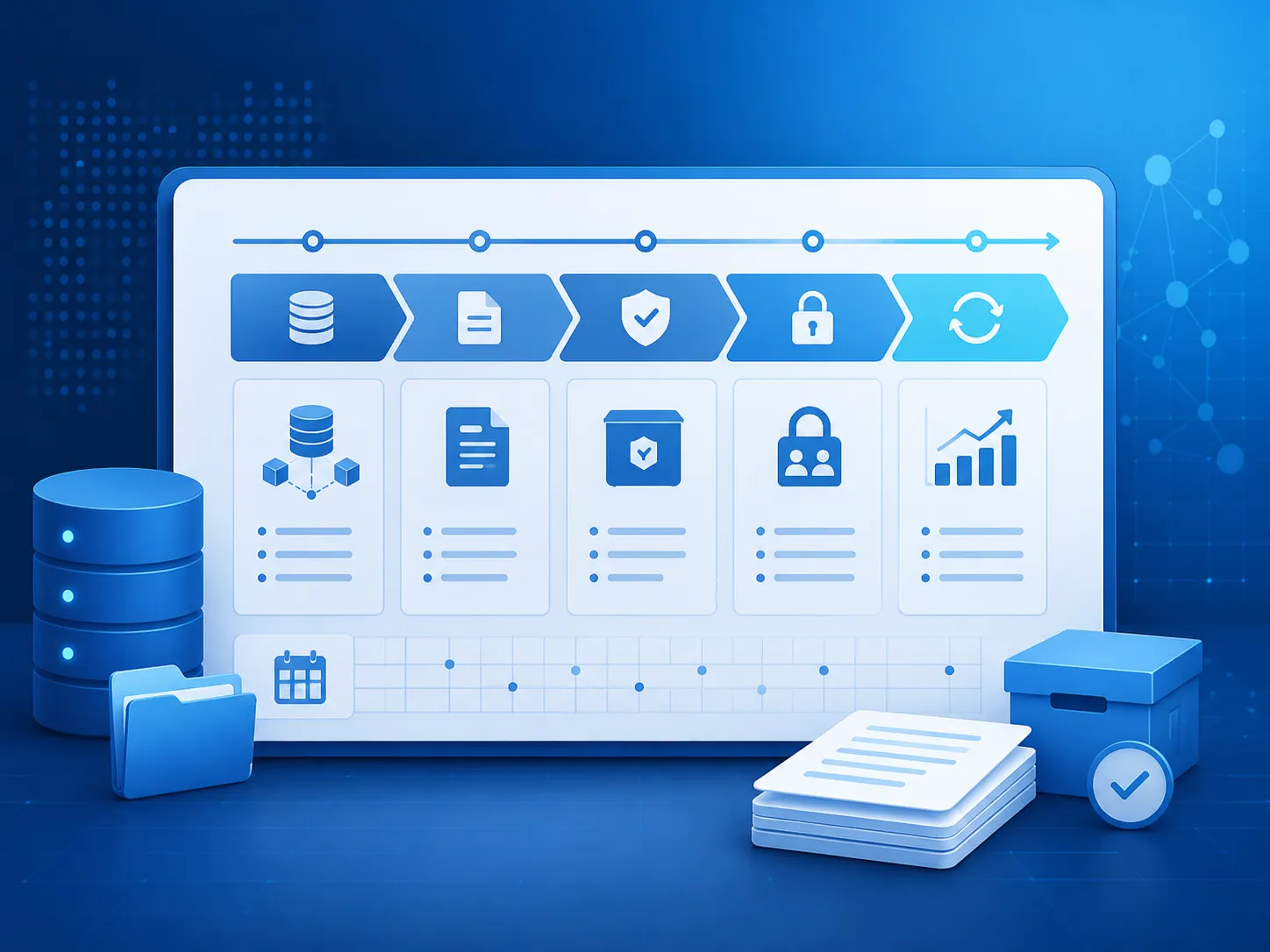
Resource information
Resource type
Research data planning template
Intended users
Researchers, project coordinators, data stewards and research groups
Recommended use
Project preparation, grant applications, data governance and FAIR planning
Status
Recommended template of the Competence Center
Download the Data Management Plan template
DOCX is recommended for preparing and reviewing the plan. XLSX can be used to assign responsibilities and monitor actions. Markdown is suitable for version-controlled and computational projects.
Available formats
What is a Data Management Plan?
A Data Management Plan, or DMP, is a structured document describing how research data will be managed throughout the research lifecycle. It records the types of data expected in a project, the standards and methods used to document them, storage and security arrangements, responsibilities, access conditions, publication plans and long-term preservation decisions.
A DMP should be prepared at the beginning of a project and reviewed whenever the data, methods, responsibilities, risks or publication plans change.
A DMP is a living document
The initial plan records expected decisions. It should be updated during the project to reflect the actual data, workflows, storage arrangements, responsibilities and preservation outcomes.
What the template covers
The template organises data management decisions into four practical planning areas.
Data creation and documentation
Data types, sources, collection and generation methods, expected volume, formats, file organisation, metadata, standards and quality control.
Storage, security and responsibility
Storage locations, backups, access control, information security, personal or sensitive data, responsible persons and institutional services.
Access, publication and reuse
Repository selection, metadata publication, access conditions, licences, embargoes, persistent identifiers and expected reuse.
Preservation and implementation
Data selection, long-term preservation, retention periods, deletion, required resources, costs, responsibilities and plan review dates.
Recommended DMP sections
The questions should be answered in proportion to the scale, complexity and risks of the project.
| Section | What should be described | Example questions |
|---|---|---|
| Project and plan information | Project title, responsible persons, version and review date | Who owns and updates the DMP? |
| Data summary | Data types, sources, formats, expected volume and purpose | Which data will be created, collected or reused? |
| Methods and quality | Collection, generation, processing, validation and quality control | How will data quality and consistency be verified? |
| Documentation and metadata | README, manifest, metadata standards, vocabularies and provenance | Which information will allow others to understand the data? |
| File organisation | Folder structure, file naming, identifiers and version control | How will files and versions be organised? |
| Storage and backup | Active storage, backup frequency, recovery and capacity | Where will working data be stored and backed up? |
| Security and access control | User roles, authentication, encryption and risk controls | Who may access, change or download the data? |
| Legal and ethical requirements | Personal data, confidentiality, consent, intellectual property and agreements | Do legal or ethical restrictions apply? |
| Data sharing | Repository, publication date, embargo, access and documentation | Which data will be shared, where and when? |
| Licensing and reuse | Licence, rights holder and reuse conditions | Which licence will be applied? |
| Persistent identifiers | DOI, ORCID, ROR and identifiers for related outputs | How will the dataset and responsible entities be identified? |
| Preservation and retention | Selection, preservation formats, repository and retention period | Which data should be preserved after the project? |
| Responsibilities | Roles of researchers, coordinators, curators and service providers | Who is responsible for each data management task? |
| Resources and costs | Staff time, storage, repository, curation and preservation costs | Which resources are required to implement the plan? |
| Review and updates | Review dates, responsible person and change history | When and how will the DMP be updated? |
Minimum Data Management Plan
At minimum, a DMP should identify the data expected in the project, explain how they will be documented and stored, assign responsibilities, and state how access, publication, protection and preservation will be managed.
The minimum plan should address: data types and formats, documentation and metadata, storage and backup, access and security, legal or ethical restrictions, repository selection, licence, preservation and responsibilities.
How to use the template
1. Define
Identify the expected data, methods, formats, volume and project requirements.
2. Plan
Describe documentation, storage, security, access, publication and preservation arrangements.
3. Assign
Assign responsibilities, resources and deadlines for each data management activity.
4. Implement
Apply the planned procedures during data collection, processing and publication.
5. Update
Review the plan when project data, methods, risks or responsibilities change.
When should the DMP be reviewed?
The plan should be reviewed at key stages of the research project.
Project start
Confirm data types, responsibilities, infrastructure and legal requirements.
Method or scope change
Update the plan when new data sources, instruments, software or partners are introduced.
Before publication
Confirm repository, metadata, licences, documentation and access conditions.
Project completion
Record what was preserved, published, restricted, transferred or securely deleted.
Example responsibility table
Responsibilities should be assigned to named roles rather than left as general project obligations.
| Activity | Responsible role | Timing | Expected result |
|---|---|---|---|
| File organisation and naming | Dataset creator | Throughout the project | Consistent folder and file structure |
| Metadata preparation | Researcher and data steward | Before repository deposit | Complete repository metadata record |
| Backup monitoring | Project coordinator or IT administrator | Regularly | Verified recoverable copies |
| Rights and access review | Project coordinator | Before publication | Approved access and licence conditions |
| Repository deposit | Authorised depositor | At publication or project completion | Published or preserved data package |
| DMP update | DMP owner | At defined review points | Current version of the plan |
Important notes
- Adapt the template to the requirements of the relevant funder, institution, project or repository.
- Do not describe future actions as completed actions.
- Name the actual storage and repository services wherever they have already been selected.
- Distinguish active project storage from long-term preservation.
- Specify who is responsible for each decision and activity.
- Include costs for storage, curation, repository deposit and preservation where they are relevant.
- Do not include passwords, credentials or security-sensitive technical details.
- Ensure consistency between the DMP, consent forms, agreements, repository metadata and actual data management practices.
- Preserve previous DMP versions when important decisions change.