Network of data experts
A distributed network of specialists supporting research data management, FAIR data, metadata, repositories, scientific workflows and open-science infrastructure across NASU institutions and partner organisations.
The network connects researchers and institutions with relevant professional and domain expertise that may not be available within a single organisation or team.
It complements the Centre’s core team by involving institutional contact persons, data stewards, data curators, domain experts, repository specialists and digital infrastructure professionals.
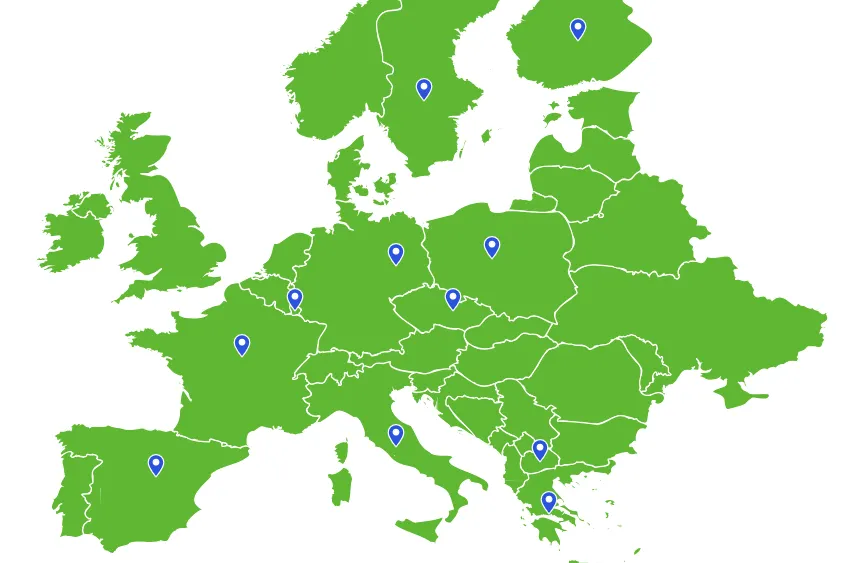
Purpose of the network
The network supports the development and sharing of research data competencies across institutions of the National Academy of Sciences of Ukraine.
It enables the Centre to route specialised requests, identify recurring institutional needs, organise professional exchange and involve relevant experts in training, methodological development and research data support.
The network extends access to expertise but does not replace the formal responsibilities of research institutions, repositories, data owners, ethics bodies or infrastructure operators.
Who contributes to the network
Institutional data contacts
Specialists designated or recognised by research institutions to support research data activities.
Data stewards and curators
Professionals supporting data management planning, documentation, metadata and FAIR data packages.
Domain experts
Researchers with expertise in discipline-specific data, methods, standards, instruments and workflows.
Infrastructure specialists
Repository, library, IT, computing, catalogue and research infrastructure professionals.
Areas of expertise
Research data management
Data management plans, lifecycle planning, organisation, preservation and responsible sharing.
Metadata and FAIR data
Metadata profiles, identifiers, controlled vocabularies, provenance and FAIR assessment.
Repositories and publication
Dataset deposit, DataverseUA, licences, DOI registration and catalogue exposure.
Scientific workflows
Experimental, computational and data-processing workflows and reproducibility documentation.
Legal and ethical issues
Access rights, licensing, personal data, intellectual property and responsible data use.
Training and support
Course development, training delivery, consultation and professional communities of practice.
Digital infrastructure
Computing, storage, authentication, catalogues, APIs and service interoperability.
EOSC readiness
Preparation of resources, metadata and services for federated discovery and use.
How the network supports users
Identify expertise
The Centre identifies the professional or domain competencies required for a request.
Route the request
The request is assigned to the core team or an appropriate network expert.
Provide joint support
Complex cases may be reviewed by several specialists representing complementary areas.
Share the results
Reusable findings may inform guidance, training materials and future support activities.
Network activities
Professional communication between institutional contacts
Exchange of data-management practices and case studies
Joint consultation and review of complex user requests
Participation in webinars, courses and practical workshops
Development and review of templates and methodological resources
Identification of common institutional needs and barriers
Support for domain metadata and scientific workflows
Cooperation with repositories and research infrastructures
[Expert name]
[Expert role or area]
Affiliation: [Institution]
Expertise: [three to six expertise terms]
Support areas: [consultation, training, metadata review, domain support or other role]
Languages: [languages in which support may be provided]
Expert directory information
Name and institutional affiliation
Professional role
Primary and secondary areas of expertise
Scientific domain
Types of support provided
Languages
ORCID or institutional profile
Availability for consultation or training
Permission to publish profile information
Participation principles
Professional competence
Participation is based on relevant institutional, technical or scientific expertise.
Institutional autonomy
Experts retain their positions and responsibilities within their home organisations.
Responsible support
Advice must respect confidentiality, personal data, intellectual property and academic integrity.
Knowledge exchange
Reusable practices and resources are shared where legal and institutional conditions permit.
Request expert support
Users do not need to identify an individual expert before submitting a request. Describe the dataset, workflow, repository or support problem, and the Centre will determine the appropriate expertise.