Is Artificial Intelligence Really Discovering New Materials?
31.05.2026
Recent reports claiming that artificial intelligence has “discovered” new materials should be read carefully. In most cases, this does not mean a ready-to-use material for a battery, sensor, or electronic device. Rather, it refers to a much earlier stage in the scientific process: the computational prediction of a material candidate.
AI has indeed become a powerful tool in digital materials science. It can rapidly explore a vast space of possible chemical compositions and crystal structures, filter out unlikely options, and suggest those that may be stable. The best-known example is GNoME, a system developed by Google DeepMind. In a publication in Nature, researchers reported that deep learning models identified 2.2 million crystal structures that are stable with respect to Materials Project data, while 381,000 structures were placed on the updated convex hull as new stable material candidates. This is a major step for materials science, but it does not automatically confirm the laboratory existence of all these materials.
(nature.com)
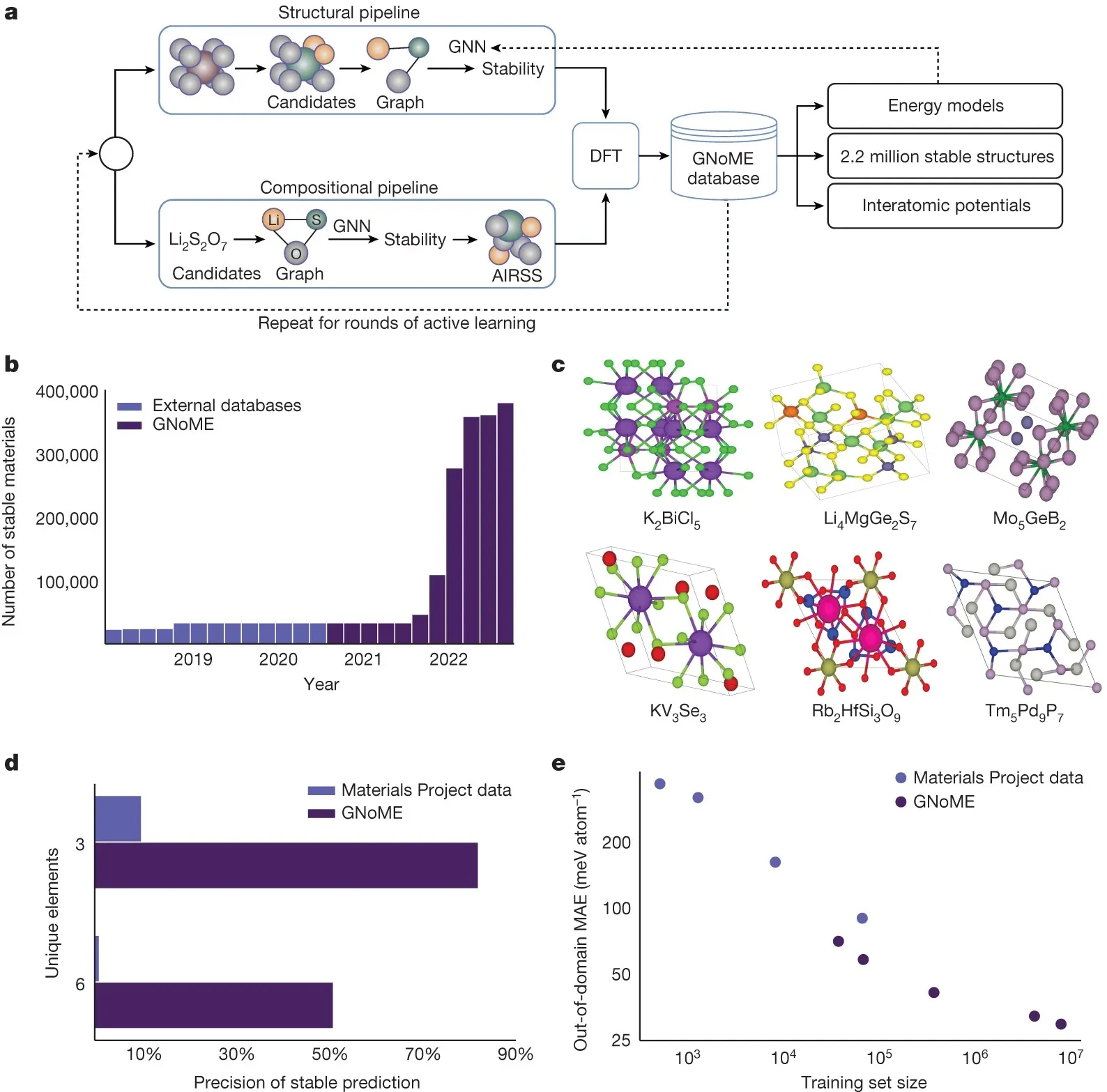
The key word here is “candidate.” In digital materials science, stability usually means computationally estimated thermodynamic stability. A material is compared with other possible phases in the same chemical system. If its energy is sufficiently low, it is considered stable or close to stable. However, this assessment depends on the model, dataset, calculation parameters, and the accuracy of the DFT approach. It does not guarantee that the material can be easily synthesized, or that it will be pure, durable, inexpensive, or suitable for a specific technological application.
Therefore, the correct chain is as follows: AI generates or selects structures; machine learning models narrow down the search space; DFT calculations refine energies and properties; the material then needs to be synthesized; its structure must be verified, for example by X-ray diffraction; and only after that can its real properties be measured. Only after these stages can we speak not merely about a computational prediction, but about a confirmed material.
The case of the autonomous A-Lab, also described in Nature, is a useful example. It combined machine learning, robotic synthesis, and analysis of experimental results. The article described 17 days of autonomous operation, 353 experiments, and 36 successfully realized inorganic crystalline solids out of 57 targets.
(nature.com)
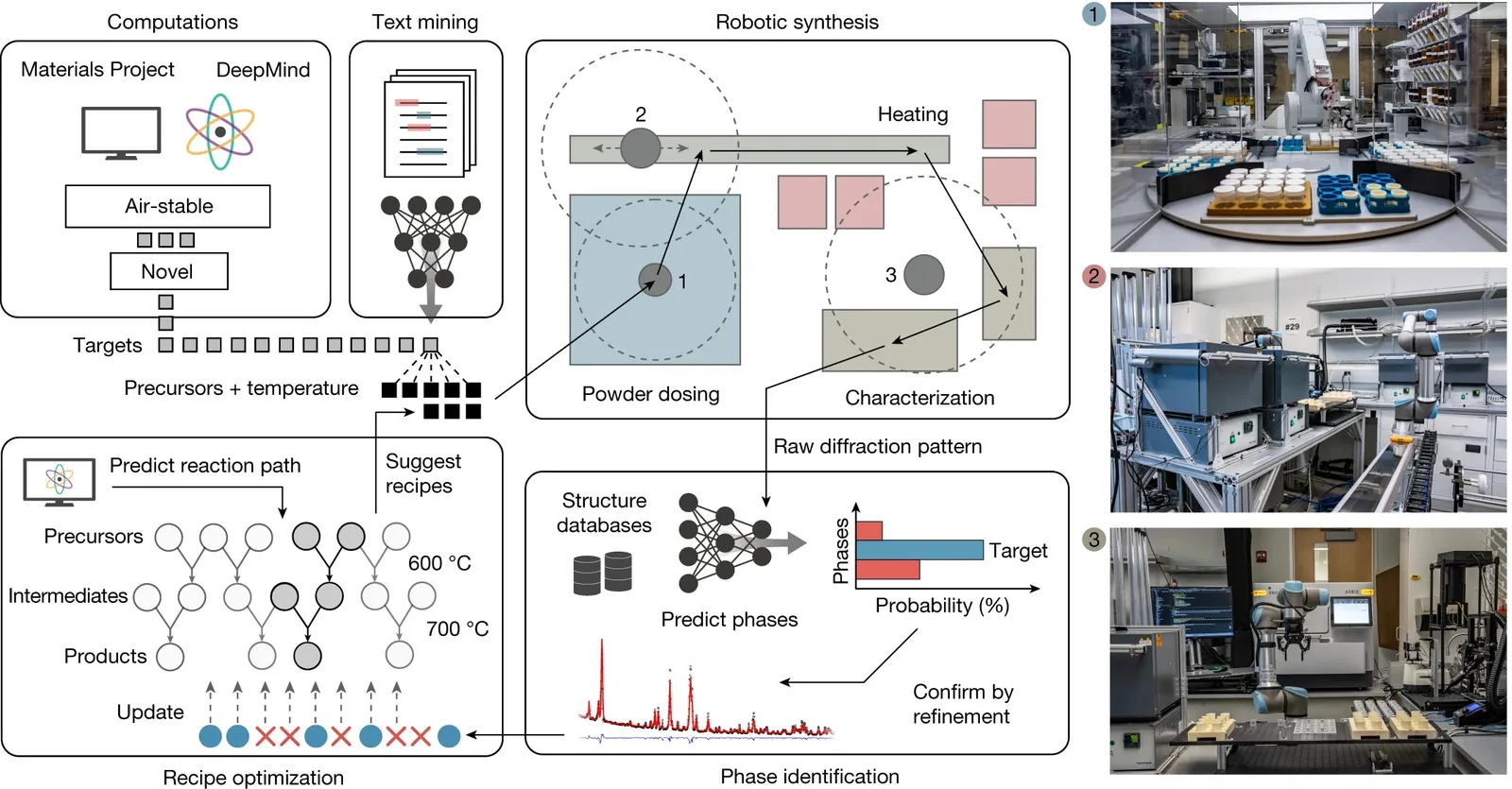
However, the subsequent discussion and correction of this work showed that caution is still necessary even in such advanced systems. Claims about the “novelty” of the materials could be misinterpreted, and some results required clarification. This is a normal scientific procedure: prediction, synthesis, and validation must be clearly separated and transparently documented.
(pubs.acs.org)
Another example is the work of Microsoft and Pacific Northwest National Laboratory. In that case, AI and high-performance computing helped rapidly narrow the search space from tens of millions of inorganic candidates to a small number of promising materials for battery applications. According to Microsoft, more than 32 million candidates were screened, after which promising options were selected for further verification.
(azure.microsoft.com)
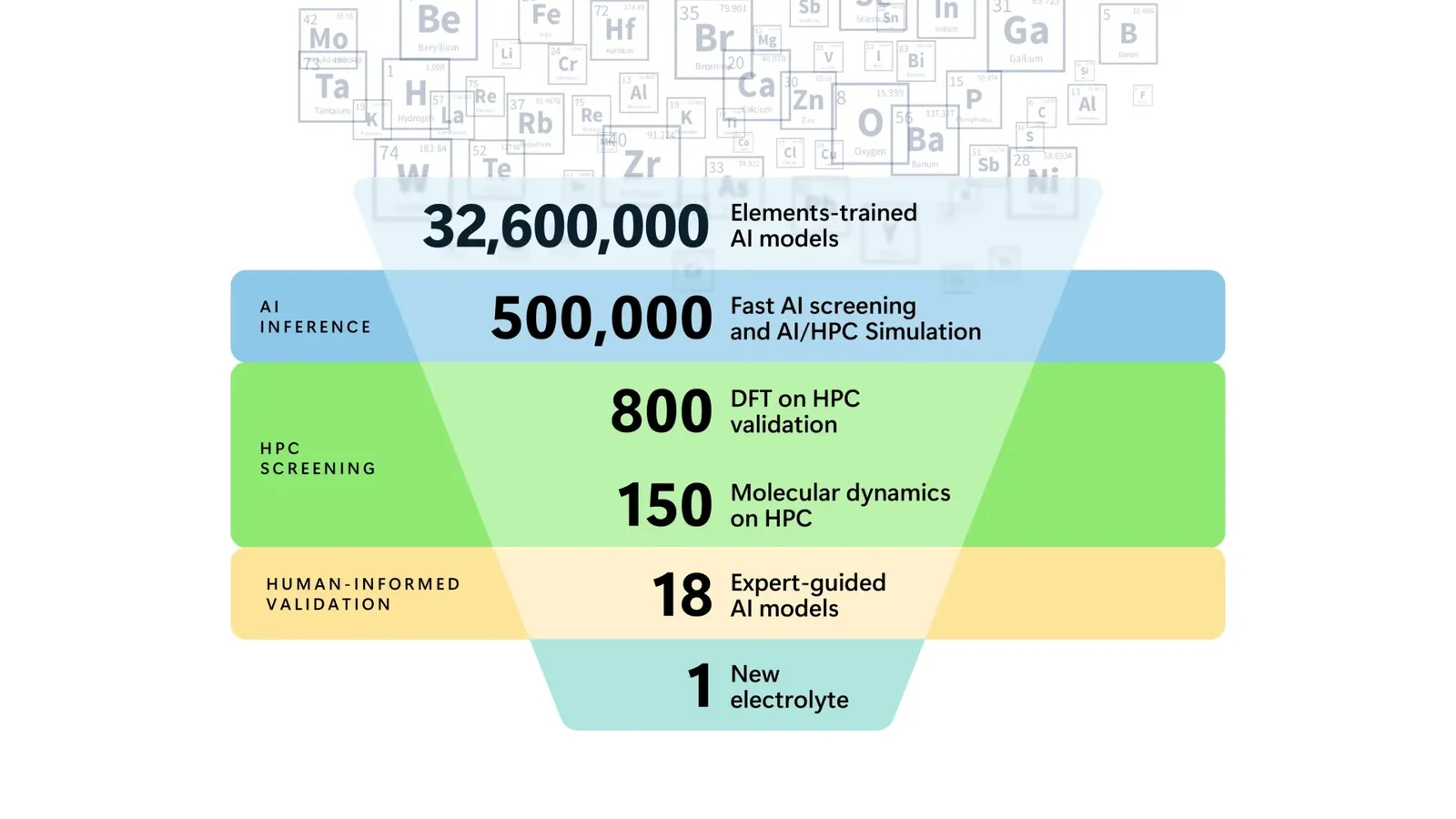
But here as well, the result is a promising direction, not a completed industrial material.
The main conclusion for research infrastructure is simple: AI does not replace materials science; it accelerates it. It helps identify what should be tested. But a scientific discovery is completed not by prediction, but by reproducible confirmation of the material’s structure, properties, and conditions of synthesis.
For Ukraine, this topic is especially important in the context of digital materials science and open science. AI-driven materials discovery requires not only algorithms, but also high-quality FAIR data: structures, input files, DFT calculation parameters, workflows, models, synthesis results, XRD data, README files, metadata, and DOIs. Without this, results are difficult to verify, reproduce, and reuse in new research.
Thus, the correct formulation is as follows: artificial intelligence is already helping to identify stable material candidates with potentially useful properties. However, between such a candidate and a real technological material there remains a full scientific pathway: calculation, synthesis, characterization, measurement, reproducibility, and open publication of data.