Skip navigation

FAIR та управління дослідницькими даними

Цей тематичний глосарій пояснює ключові концепції, що використовуються в підготовці даних FAIR та управлінні дослідницькими даними.

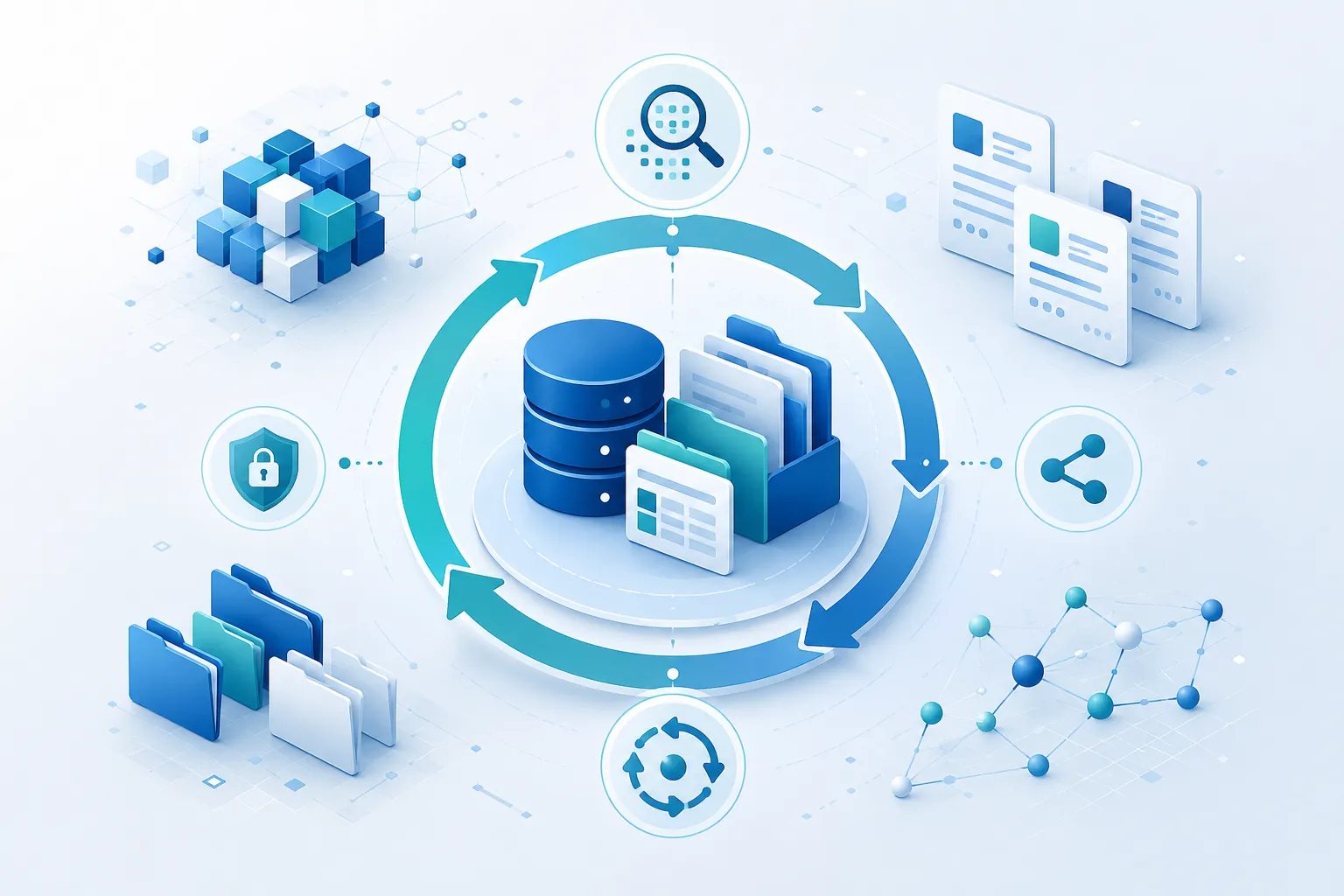
Він охоплює життєвий цикл дослідницьких даних, плани управління даними, документацію, зберігання, контроль якості, збереження, доступ, відповідальний обмін та чотири виміри FAIR: можливість пошуку, доступність, сумісність та можливість повторного використання.

ChatGPT Image 26 лип. 2026 р., 14_22_11 (1)

Інформація про ресурс

Тип ресурсу

Тематичний глосарій з управління дослідницькими даними

Цільові користувачі

Дослідники, дослідницькі групи, розпорядники даних, куратори та користувачі репозиторію

Рекомендоване використання

Під час підготовки Планів управління даними, метаданих, пакетів FAIR та депозитів у репозиторії

Мова

Бажані англійські терміни з українськими еквівалентами

FAIR не означає автоматично відкритий

Принципи FAIR стосуються можливості знаходити, отримувати доступ, взаємодіяти з даними та повторно використовувати їх за чітко визначених умов. Набір даних може бути обмежений або під ембарго, і все ще відповідати практикам FAIR, якщо його метадані залишаються доступними для виявлення, а процедура доступу чітко задокументована.

Відкриті дані надаються для доступу та повторного використання за зазначених умов. Дані FAIR можуть бути відкритими, обмеженими, під ембарго або, у обґрунтованих випадках, закритими.

Переглянути терміни

Виберіть літеру, щоб перейти до відповідного розділу глосарію.

A

Access conditions

Ukrainian: умови доступу

Rules and procedures that determine whether, when and how users may obtain a dataset or individual files.

Access conditions may include open access, an embargo, registration, authentication, approval by a data owner or a formal access request.

Accessible

Ukrainian: доступні · FAIR dimension: A

A FAIR dimension requiring that data or metadata can be retrieved by their identifier using a clearly defined and standardised access procedure.

Authentication or authorisation may be required. Metadata should remain available where possible even when the data files are restricted or no longer available.

Active research data

Ukrainian: активні дослідницькі дані

Data that are currently being collected, generated, analysed, transformed or used during an ongoing research project.

Active data normally require working storage, access controls, regular backup, version management and documentation of changes.

Back to section A

B

Backup

Ukrainian: резервне копіювання

The creation of additional copies of data so that working files can be recovered after deletion, corruption, hardware failure or another incident.

A backup is normally intended for recovery and should not be confused with long-term preservation or repository publication.

C

Data curation

Ukrainian: кураторський супровід даних; курування даних

A set of activities that improve the organisation, documentation, quality, integrity, preservation and reuse readiness of research data.

Data curation may include reviewing files, correcting metadata, preparing a README and manifest, documenting provenance, checking formats and validating a publication package.

D

Data

Ukrainian: дані

Recorded representations of observations, measurements, calculations, simulations, classifications, statements or other information that can be stored and processed.

Data may be quantitative or qualitative, digital or non-digital, structured or unstructured.

Data documentation

Ukrainian: документація даних

Information that explains the content, structure, origin, methods, variables, formats, processing and limitations of a dataset.

Documentation may be provided through a README, data dictionary, codebook, protocol, workflow description, provenance record or technical report.

Research data lifecycle

Ukrainian: життєвий цикл дослідницьких даних

The sequence of stages through which research data pass, from planning and creation to processing, analysis, preservation, publication, reuse and eventual disposal.

The lifecycle is often iterative: reused data may become input for a new project and enter another cycle of management and documentation.

Data Management Plan

Ukrainian: план управління даними · Abbreviation: DMP

A structured document describing how research data will be collected or generated, organised, documented, stored, protected, preserved, shared and managed during and after a project.

A DMP should be reviewed and updated when the project, methodology, data types, access conditions or publication plans change.

Data minimisation

Ukrainian: мінімізація даних

The practice of collecting, processing and retaining only the data necessary for a defined research purpose.

It is particularly important when working with personal, confidential or sensitive information.

FAIR data package

Ukrainian: FAIR-пакет даних

An organised collection of research data, metadata, documentation and supporting files prepared for verification, preservation, publication and reuse.

A package may contain a README, manifest, dataset metadata, scripts, configuration files, software-environment information, provenance and quality-control evidence.

Data preservation

Ukrainian: збереження дослідницьких даних

Managed actions intended to maintain the integrity, authenticity, accessibility and usability of data for a defined period.

Preservation may include format management, integrity checks, redundant storage, preservation metadata and documented responsibility.

Data quality

Ukrainian: якість даних

The degree to which data are accurate, complete, consistent, valid and suitable for their intended scientific purpose.

Data quality should be supported by documented methods, calibration, validation, uncertainty information, quality controls and known limitations.

Data retention

Ukrainian: строк зберігання даних; утримання даних

The period for which data and related documentation must or should be retained before review, transfer, anonymisation or disposal.

Retention periods may be determined by scientific, legal, contractual, ethical, institutional or funder requirements.

Data sharing

Ukrainian: надання доступу до даних; поширення даних

The controlled provision of research data to other people, organisations or systems.

Sharing may be public or restricted and should include clear access, licence, citation, confidentiality and responsibility conditions.

F

FAIR data

Ukrainian: дані, підготовлені відповідно до принципів FAIR

Data and accompanying metadata managed so that they can be found, accessed under defined conditions, combined with other data and reused.

FAIR is primarily concerned with the conditions and infrastructure supporting discovery, access, interoperability and reuse. It is not a single file format or certificate.

FAIR Principles

Ukrainian: принципи FAIR

A set of guiding principles for improving the Findability, Accessibility, Interoperability and Reusability of digital research objects.

The principles apply to both human users and machines and emphasise identifiers, metadata, standard protocols, vocabularies, provenance and reuse conditions.

FAIRification

Ukrainian: FAIR-ізація даних

A planned process of improving data and metadata so that they better satisfy the FAIR Principles.

FAIRification may include assigning identifiers, improving metadata, applying controlled vocabularies, documenting provenance, defining licences and access procedures, and preparing machine-readable records.

Findable

Ukrainian: такі, що можуть бути знайдені · FAIR dimension: F

A FAIR dimension requiring that data and metadata can be reliably discovered by people and machines.

Findability is supported by persistent identifiers, sufficiently rich metadata, explicit inclusion of the data identifier in the metadata and registration or indexing in a searchable resource.

I

Interoperable

Ukrainian: сумісні · FAIR dimension: I

A FAIR dimension requiring that data and metadata can be combined, exchanged and interpreted across systems, organisations and scientific communities.

Interoperability is supported by shared formats, formal metadata structures, controlled vocabularies, stable identifiers and explicitly defined relationships.

O

Open data

Ukrainian: відкриті дані

Data made available for access and reuse under explicit terms that permit their use beyond the original purpose.

Open data should have clear documentation, a suitable licence or rights statement and a stable access location. Openness alone does not guarantee FAIRness or scientific quality.

R

Reproducibility

Ukrainian: відтворюваність

The ability to obtain consistent results by using the available data, methods, code, parameters and computational or analytical procedures.

Reproducibility requires sufficient documentation and may also require software versions, execution environments, workflow information and provenance records.

Research data

Ukrainian: дослідницькі дані

Data collected, observed, measured, created, calculated or derived during research and used as evidence for scientific reasoning, validation or conclusions.

Research data may include measurements, observations, survey responses, images, recordings, simulation outputs, software inputs and outputs, models, laboratory records and derived tables.

Research data management

Ukrainian: управління дослідницькими даними · Abbreviation: RDM

The organisation, documentation, storage, protection, preservation, sharing and oversight of research data throughout their lifecycle.

RDM includes technical activities, policies, responsibilities, legal and ethical decisions, metadata preparation, quality control and planning for preservation and reuse.

Responsible data sharing

Ukrainian: відповідальне поширення даних

The provision of access to research data in a way that respects legal, ethical, contractual, security and scientific responsibilities.

Responsible sharing requires verification of rights, confidentiality, appropriate access controls, documentation, licences, attribution and possible risks to people, organisations or research infrastructure.

Reusable

Ukrainian: придатні для повторного використання · FAIR dimension: R

A FAIR dimension requiring that data and metadata contain sufficient information for appropriate use beyond the original research context.

Reusability is supported by detailed descriptions, provenance, clear licences, quality information, community standards and documentation of methods and limitations.

S

Sensitive data

Ukrainian: чутливі дані

Data whose unauthorised disclosure, alteration or loss could create legal, ethical, security, commercial, personal or social harm.

Sensitive data may require restricted access, encryption, controlled storage, anonymisation or pseudonymisation, formal agreements and documented approval procedures.

Data storage

Ukrainian: зберігання даних

The technical provision and organisation of space in which research data are kept during or after a project.

Storage decisions should consider capacity, reliability, access control, backup, location, security, performance and the period for which the data must remain available.

V

Version control

Ukrainian: контроль версій

A method for recording, identifying and managing changes to data, code, documentation or metadata over time.

Version control helps distinguish approved, draft, corrected and superseded objects and supports traceability, collaboration and reproducibility.

Як використовувати ці терміни

Послідовно застосовуйте бажану термінологію в усіх планах управління даними, планах, записах метаданих, файлах README, депозитах репозиторіїв, інституційних політиках та навчальних матеріалах.

Планування

Використовуйте ці терміни під час підготовки плану управління даними та призначення обов'язків.

Документація

Застосовуйте узгоджену термінологію у файлах README, методах, описах та локальних інструкціях.

Публікація

Розрізняйте концепції доступу, ліцензування, збереження та повторного використання в записах репозиторію.

fc-card-shadow fc-card-compact">

Навчання

Використовуйте визначення як вступні пояснення, а не як заміну спеціалізованим стандартам або юридичним визначенням.

Пояснювальний статус

Ці визначення призначені для практичної підтримки дослідницьких даних. Якщо термін має офіційне визначення в законодавстві, інституційній політиці, стандарті метаданих, Керівних принципах FAIR або дисциплінарній специфікації, перевагу має авторитетне джерело.